Seduce Anyone: The Forgotten Art of Presence, Power, and the Subconscious Mind
The room decides before you speak
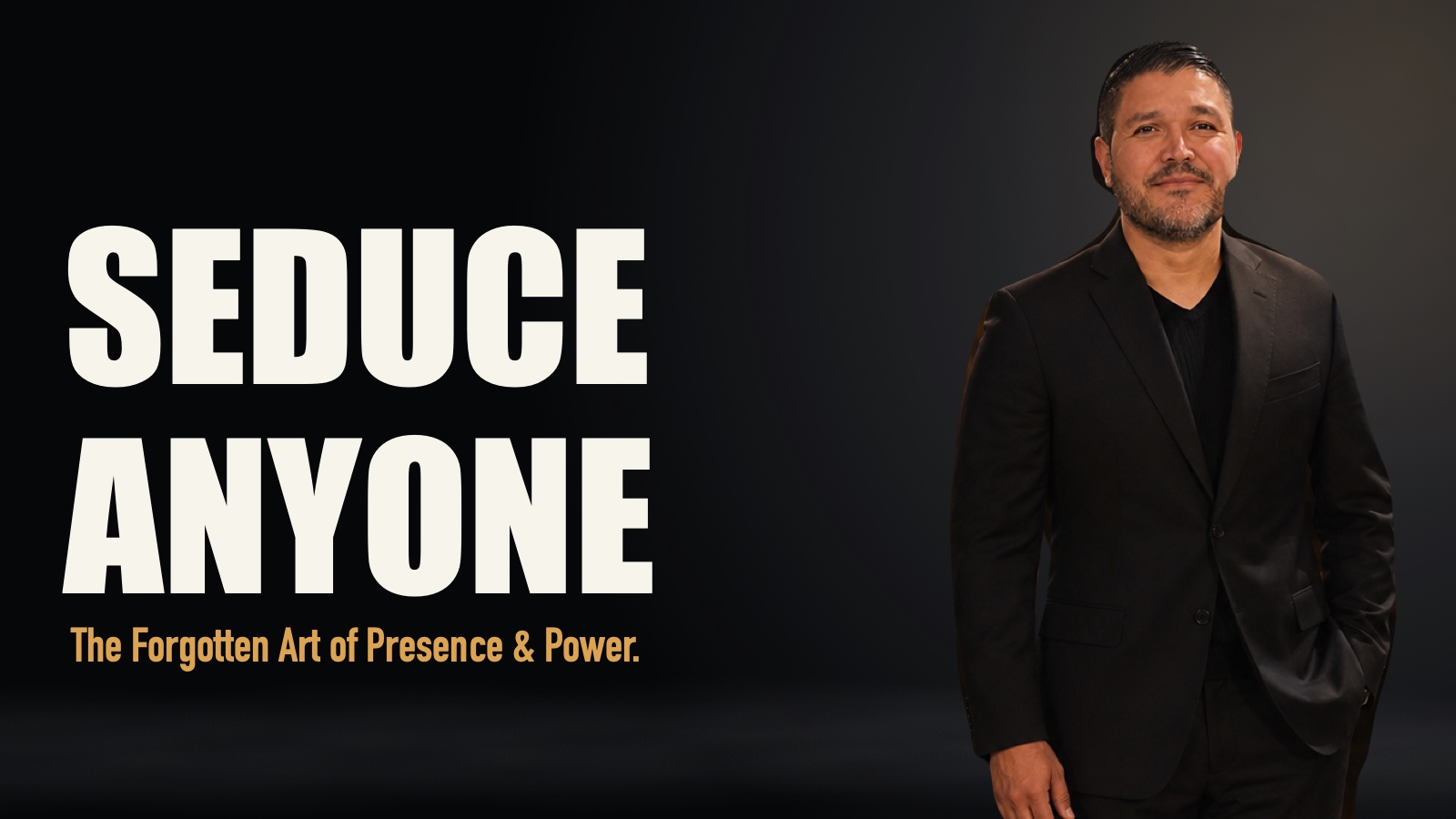
In December 2015, Tony Robbins pointed into a crowd of thousands and called Carlos Inspire on stage. No warning, no script, no notes card. By the time he said a single word that mattered, the room had already made up its mind about him, and not from anything he said. That's the premise of this episode: most persuasion advice obsesses over what to say, while the room, the client, the person across the table has usually decided how it feels about you before your words catch up.
This episode breaks that gap down into six specific techniques, pulled from two sources studied over years: Robert Greene's published frameworks on power and seduction (The 48 Laws of Power, The Art of Seduction), and the work of Jean-Louis Rodrigue, the Alexander Technique coach who spent fifty years training actors including Leonardo DiCaprio (J. Edgar Hoover) and Margot Robbie (I, Tonya). Carlos checks both against his own record: 20+ years training sales teams and 300+ keynote speeches, so this isn't a book report, it's a working framework verified against a live sales floor and a stage.
Six techniques for commanding a room
1. Root before you speak. Rodrigue trains actors that if you're not rooted to the ground, you fake it in your neck, tensing up and holding your breath without noticing. Most people rehearse what they'll say before a high-stakes moment and never rehearse their feet. Feeling your weight land, both feet flat and heavy, is the physical difference between a person a room reads as solid and one it reads as needy.
2. The pause does the work, not the words. Robert Greene's law: say less than necessary. Rodrigue gives actors a three-word mantra before every scene, "I have time," the same internal cue an Olympic diver uses standing at the edge of the board before committing to the dive. Across 20 years of training sales reps and coaching speakers, Carlos has found the same pattern holds outside acting and outside sports: the people who win a room are never the ones who talk fastest. They're the ones who can sit in three full seconds of silence before answering a hard question.
3. Reveal, don't sell. Rodrigue's answer to what actually builds audience trust: "The moment you begin to sell, the audience goes away from you." Greene calls the same mechanism controlled vulnerability. Both point to the same move: stop pitching, and reveal one true, slightly uncomfortable thing instead.
4. Your body talks first. Rodrigue teaches a 70/20/10 split: roughly 70 percent of what you communicate happens in your body, 20 percent in your voice and tone, and the actual words land at 9 to 10 percent, yet most people spend nearly all their prep time on the 10 percent that matters least. The mechanism behind this is mirror neurons: walk into a room breathing shallow and fast, and the room's nervous system copies that pattern without anyone deciding to. Rodrigue also worked with DiCaprio on J. Edgar Hoover, a man known for reading a lie through a change in temperature in someone's palm during a handshake, a real-world example of the same channel this episode is about: the body broadcasts the truth of your state whether your mouth cooperates or not.
5. Collapse is reversible. Rodrigue describes an 84-year-old client who arrived barely able to walk, wanting only to get back to his own garden. Five to six months of breath and posture work later, Rodrigue walked him around the block, unassisted, back to the garden. Rodrigue frames collapse as a lack of consciousness, not a lack of confidence, meaning most people are collapsed and simply don't know it.
6. Say less, and let it reverberate. Greene's "say less than necessary" is often misread as staying silent or playing mysterious. Rodrigue supplies the missing half: actors are trained never to project their voice, because "sound doesn't project, it reverberates." You don't push your voice at people; you let your whole body vibrate with what's true, and it reaches them on its own.
The question to sit with
Carlos closes the episode with one question worth carrying into your next high-stakes room, meeting, stage, or conversation: where are your feet? Rooted, or performing? He ties it back to his own start, selling bread on the streets of Brazil as a kid because his family needed him to, with no stage, no network, and no script, just a body that showed up honest every time because it had to. That, he argues, was the technique the whole time.
Listen to the full episode of The Carlos Inspire Show for the complete breakdown, including the J. Edgar Hoover story in full and the mechanics behind each of the six techniques.
Sources: Jean-Louis Rodrigue interview (Film Courage); Robert Greene, The 48 Laws of Power and The Art of Seduction, concepts named and credited to Greene throughout, paraphrased from his general published work since no excerpt/transcript file was available for direct quotes. Carlos's sales-training and keynote-speaking references are drawn from his own 20+ year career record.
You've Been Manipulated 3 Times Today (Here's How)